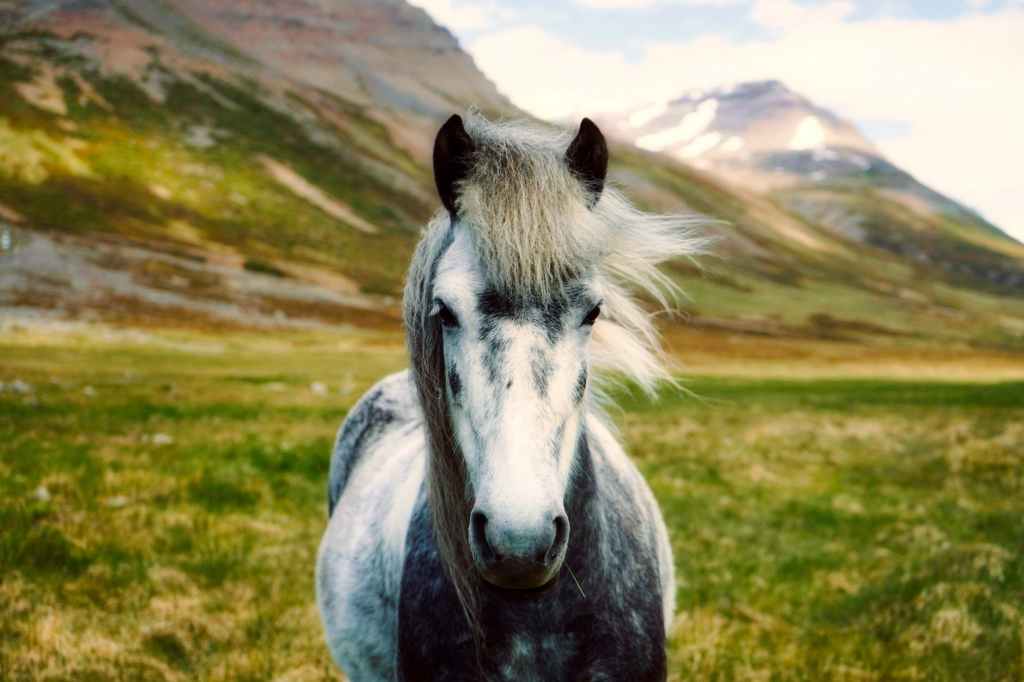
If you’ve started reading WILD HEARTS by now (and a million thanks to you if you have), then you’ve likely already come across some of my four-legged characters… and while Tang (Cara’s sweet dog) certainly plays a main role in the book, he’s not one of the four-legged characters I’m talking about. WILD HEARTS gets part of its name from the wild mustangs that feature heavily in the story – the majestic horses of the American west that Dustin Luray strives to save, protect, and rehome through his Rocky Mountain Mustang Rescue. This rescue operation is a fictional one, of course, but it is inspired by real-life organizations and ranches of the same sort. The plight of wild mustangs in the west that Dustin educates Cara on during one of their early conversations in the book is a very real one. Today, I thought it would be fun to dive into the real world of American wild mustangs in this blog post, and to shed some light on why I was inspired to include them in my first novel.
Wild mustangs are believed to have been indigenous to North America, roaming this land and crossing over into Asia via the Bering Land Bridge prior to the ice age that resulted in its flooding, roughly 10,000-11,000 years ago. After that, wild mustangs disappeared from North America, and they weren’t re-introduced to the continent until the Spanish conquistadors brought them, beginning in the 15th century. From that point, herds of European horses were re-established, even becoming popular among Native Americans by the 17th century. Though these horses’ ancestors had been born in this land, roaming free for thousands of years, they were now new to the Americas – a re-introduced indigenous species.
Through the centuries, mustangs were a staple of wild American land – specifically the western region. The horses that roamed free were often rounded up for use in war between the 19th and 20th centuries, and by the 1950s their population had severely declined. The capture methods of these horses had put them under serious threat – limiting their numbers to only around 25,000 (a combination of horses and burros). This led to the Wild and Free-Roaming Horses and Burros Act of 1971, as well as a number of other statutes that limited the methods by which the horses could be rounded up and captured. Over time, through the involvement of organizations such as the United States Fish and Wildlife Service and National Park Service (among others), wild mustang numbers have risen to an estimated 80,000 today (roughly 70,000 horses and 10,000 burros). This is great news, but it’s not the end of the story.
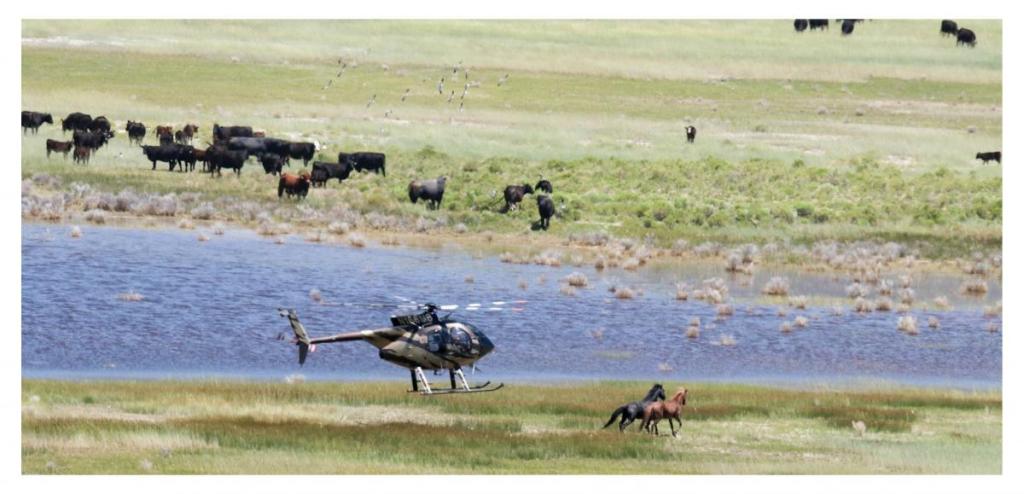
While Congress has been supportive of wild mustangs since the passing of the Act in 1971, they have been increasingly under pressure by special interest groups to eradicate wild mustangs from public lands – specifically for the purpose of livestock grazing. The Bureau of Land Management conducts cruel and stressful practices, such as herding wild mustangs via the use of low-flying helicopters – corralling these horses into government-controlled enclosures and long-term holding facilities. Many mustangs are injured during the process, separated from their young, and even killed. They are branded, and some are adopted or auctioned off to start new domesticated lives, while many more unfortunate mustangs live out their days in these enclosures, or even more depressingly, are sent off to slaughterhouses. Round-ups occur frequently enough that mustangs are always entering these holding facilities, and there is therefore a constant need to figure out what to do with them. Understandably, there are many organizations and non-profits dedicated to preserving wild mustangs’ ‘wildness’, and fighting special interests to keep these horses on the land that is rightfully theirs… but then, there are people like Dustin Luray, who do their best for the mustangs that have already been captured.
While my character, Dustin, certainly doesn’t agree with the government’s role in rounding up wild mustangs and pulling them from their natural habitat, he recognizes that this is a complex issue. His role is not to return wild mustangs to the wild – or even to fight the process of capture and adoption – but rather to play his part in ensuring the humane treatment of these formerly wild horses, to care for them at his rescue operation, and to rehome them to people who will respect and honor them.
In chapter 5 of WILD HEARTS, Dustin shares with Cara his reasoning for establishing the Rocky Mountain Mustang Rescue in Wyoming, and educates her on the dangers these horses face at the hands of the cattle ranchers who want them off of the land. The mustangs and the work he does for them feeds his soul, and it’s one of the elements of his character that pulls Cara back in. That he could love and strive to protect something so much bigger than himself is something that really resonates with her, and makes her want to get to know this new version of him now that they’ve reunited.
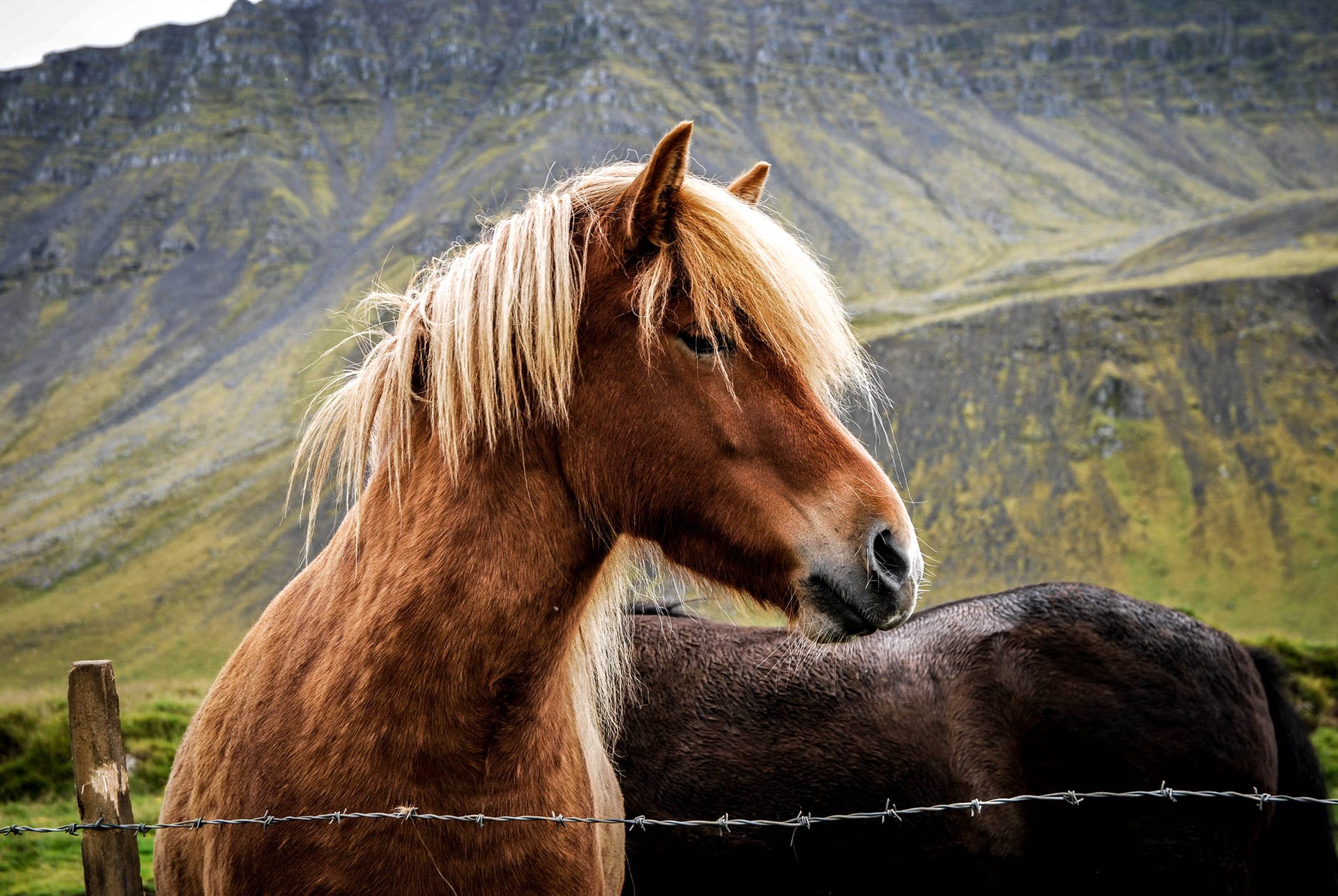
I honestly can’t quite say why I was so intrigued by the story of American wild mustangs, or why I felt compelled to include them in WILD HEARTS… but they just fit. I have no personal experience with them. I’ve never seen a wild mustang (though several years ago while riding in a car through Nevada, I kept my eyes peeled, hoping). However, as horses have a special way of creeping into any story I write, I knew that Dustin would be a horseman. I contemplated making him a cowboy – a bronc rider, maybe. But then… wild horses. I don’t know why, but as I began my writing, I guess Dustin Luray told me he was a rescuer of wild mustangs, and I went with it. I learned a lot about them in the process, and I’m so glad that I incorporated them into my story.
There’s so much more to learn about them, though. Their plight – though improved in recent decades – is still a real one. They face constant threat by those same special interests that have targeted them for years, as well as political administrations that aim to appease ranchers and landowners in the west. Helicopter round-ups, inhumane capture, and mustang slaughter are sad realities of the American mustang story. Rescue organizations like Dustin’s certainly exist, but the vast majority of formerly wild horses will never be adopted or know loving, kind homes once they’re snatched from their herds.
If this interests you at all, I encourage you to visit The American Wild Horse Campaign to learn more about this issue and how you can get involved to protect this precious species and the land they roam. The Wild Horse Rescue Center (though based in Florida, not Wyoming) is also a cool resource – and a nice example of what I’d like to imagine the Rocky Mountain Mustang Rescue might look like. Take a look at their website to immerse yourself in a real-life representation of Dustin Luray’s work, and see what mustang rescue and adoption entails.
Thanks for diving into the world of America’s wild mustangs with me today! As WILD HEARTS is now out there for anyone to enjoy, I’d love to pull readers behind the scenes in some of these blog posts – to give insight into some of my inspiration in its writing. This was a fun place to start. Stay tuned (and subscribe to my blog, if you’re so inclined!) for more behind-the-scenes peeks at the world of WILD HEARTS.
WILD HEARTS is available to purchase in Kindle and Paperback format at Amazon – BUY NOW!
Please consider leaving a review/rating for WILD HEARTS on Goodreads.
 STEPHANIE KLINE
2 thoughts on “Behind WILD HEARTS – Wild Mustang Inspiration”